
I.Solution Overview
A high-speed galvanometer is a high-precision optical device used to accurately control laser beam direction, widely applied in various fields. Its core component is the galvanometer motor, usually a voice coil motor or torque motor, which drives the mirror to swing rapidly and realize fast changes in beam direction. High-speed galvanometers feature high-speed response, high-precision control, high stability and wide frequency range, meeting the requirements of different application scenarios.
In laser processing, high-speed galvanometers are used for laser cutting, marking, welding, etc., to precisely control beam direction and achieve high-precision processing. In optical scanning, such as laser scanning microscopes and lidars, high-speed galvanometers are used to scan beams rapidly to acquire high-resolution images. In optical communication, high-speed galvanometers are used for fast beam switching and routing to achieve efficient optical signal transmission. In 3D printing, high-speed galvanometers control laser beam direction to realize rapid material solidification and forming.
Technical parameters of high-speed galvanometers include swing angle (±10° to ±40°), response speed (several milliseconds to tens of milliseconds), angle accuracy (sub-microradian level) and frequency range (hundreds of hertz to thousands of hertz). Despite challenges such as mechanical wear, thermal management and cost, with technological development, the accuracy, response speed and frequency range of high-speed galvanometers will continue to improve, with more intelligent functions integrated such as adaptive control and fault diagnosis, further expanding their application fields.
II.Function Definition & Performance Specifications
l Response Speed: The high-speed galvanometer features excellent frequency response, enabling fast response to input signal changes and rapid adjustment of beam direction.
l Angle Accuracy: The high-speed galvanometer offers high repeat positioning accuracy, returning precisely to the initial position after multiple swings to ensure accurate control of beam direction.
l Wide Frequency Range: The operating frequency range of high-speed galvanometers is typically hundreds to thousands of hertz, meeting the requirements of different application scenarios.
l High Stability: The high-speed galvanometer maintains high precision and stability during long-term operation, suitable for applications requiring continuous long-time work.
l Frequency Response: The high-speed galvanometer features excellent frequency response, enabling fast response to input signal changes and rapid adjustment of beam direction.
l Bandwidth: The high-speed galvanometer has a wide bandwidth, capable of handling high-frequency signals and suitable for high-speed, high-precision beam control.
l Phase Margin: The high-speed galvanometer provides sufficient phase margin at high frequencies, ensuring system stability and reliability.
l Angle Resolution: The high-speed galvanometer features high angle resolution, enabling precise control of small changes in beam direction to meet high-precision application requirements.
l Anti-interference Capability: The high-speed galvanometer features strong anti-interference capability, operating stably in complex electromagnetic environments without being affected by external interference.
III.Principle of High-Speed Galvanometer Drive
The working principle of a high-speed galvanometer is based on the galvanometer motor driving the mirror to swing rapidly, thereby precisely controlling the direction of the laser beam or light beam. Galvanometer motors usually adopt voice coil motors or torque motors, which can respond quickly to current signals and achieve rapid mirror swing. The mirror swing angle is completed within several milliseconds, enabling high-speed and high-precision beam control. The high-speed galvanometer realizes precise adjustment of mirror position through accurate current control and feedback system. The control system adjusts the motor’s drive current according to preset command signals, making the mirror swing rapidly to the target position. A position sensor monitors the mirror position in real time and feeds the position information back to the control system, ensuring the accuracy and stability of the mirror position.
The swing angle of a high-speed galvanometer is usually between ±10° and ±40°, depending on the application scenario and design requirements. Its response speed is typically several milliseconds to tens of milliseconds, enabling rapid beam direction changes. Angle control accuracy is usually at the sub-microradian level, meeting high-precision application requirements. The operating frequency range is generally hundreds to thousands of hertz, adapting to different application scenarios. High-speed galvanometers are widely used in laser processing, optical scanning, optical communication and other fields, satisfying high-speed and high-precision optical application requirements.
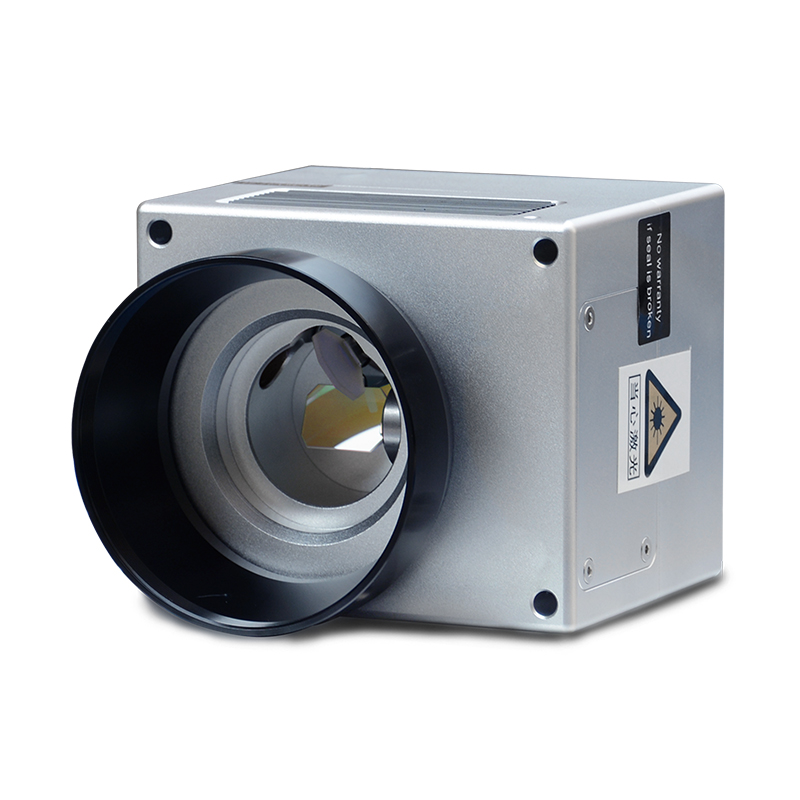
Figure: High-Speed Laser Galvanometer
IV.Hardware Design
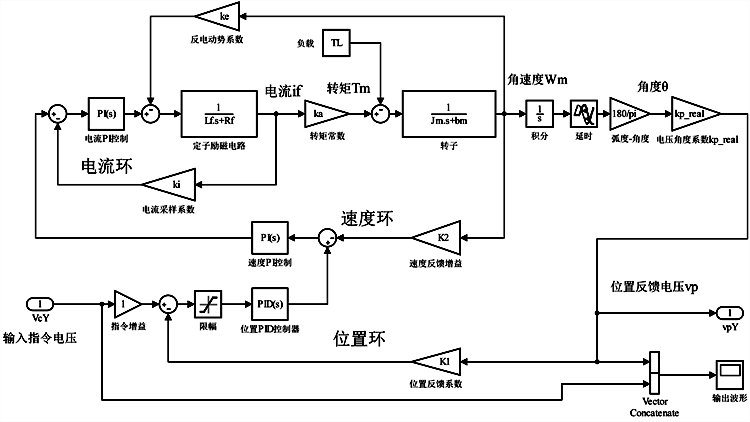
High-speed galvanometer drive involves a great many circuits. This section mainly introduces the following related circuits: low-pass filter & inverting amplifier circuit, 5V power supply circuit, 12V power supply circuit, error comparator circuit, and power supply undervoltage detection & alarm circuit.
1. Low-Pass Filter & Inverting Amplifier Circuit
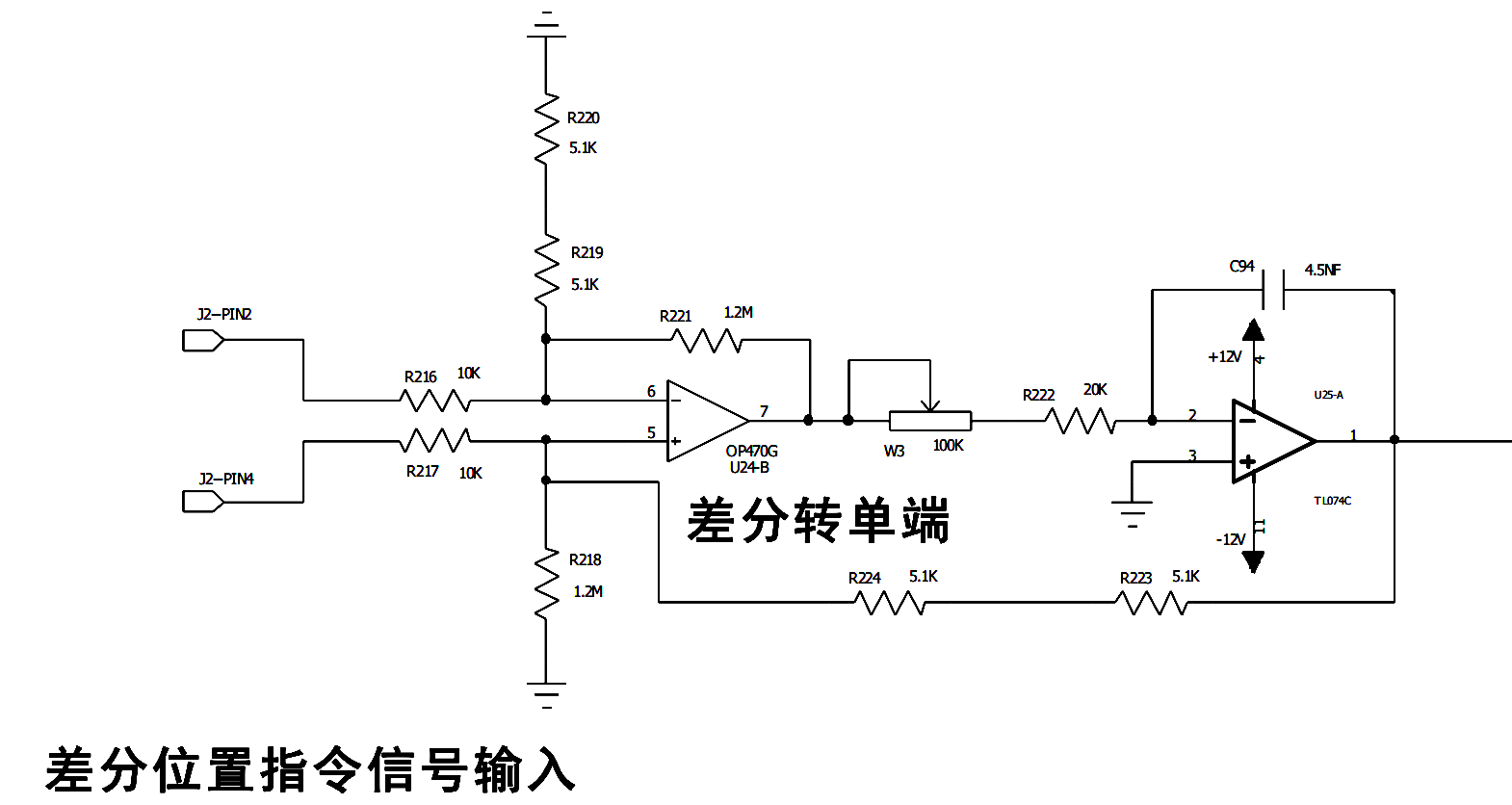
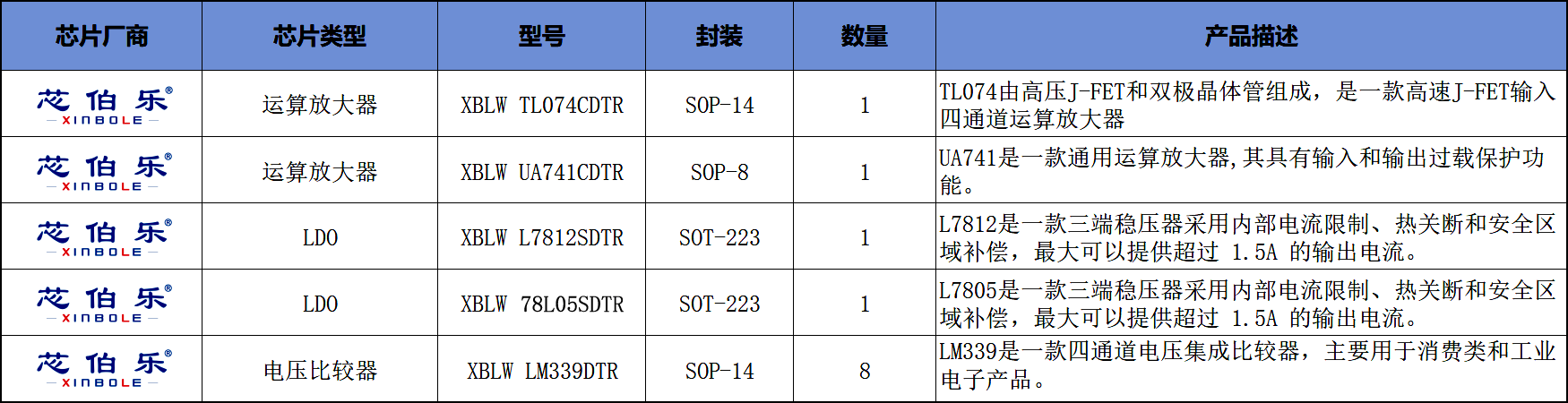
This circuit is a differential-to-single-ended circuit, mainly composed of operational amplifier OP470G and XBLW TL074C high-speed J-FET input quad operational amplifier. Its core function is to convert differential position command signals into single-ended signals to meet the signal format requirements of subsequent circuits. Differential signals are input to the inverting and non-inverting input terminals of OP470G through a resistor network (R216, R217). Feedback resistor R221 determines the amplification factor of the signal, while potentiometer W3 is used to fine-tune the amplitude of the output signal. The output signal of OP470G is transmitted to the inverting input terminal of XBLW TL074C through potentiometer W3 and resistor R222. XBLW TL074C further processes the signal, and capacitor C94 is used for phase compensation to ensure the output single-ended signal has good quality and stability. The XBLW TL074C high-speed J-FET input quad operational amplifier plays a key role in the high-speed galvanometer drive system, featuring high slew rate, low input offset and bias current. It ensures that differential position command signals are accurately converted into single-ended signals, realizing precise control of the galvanometer.
2. 5V Power Supply Circuit
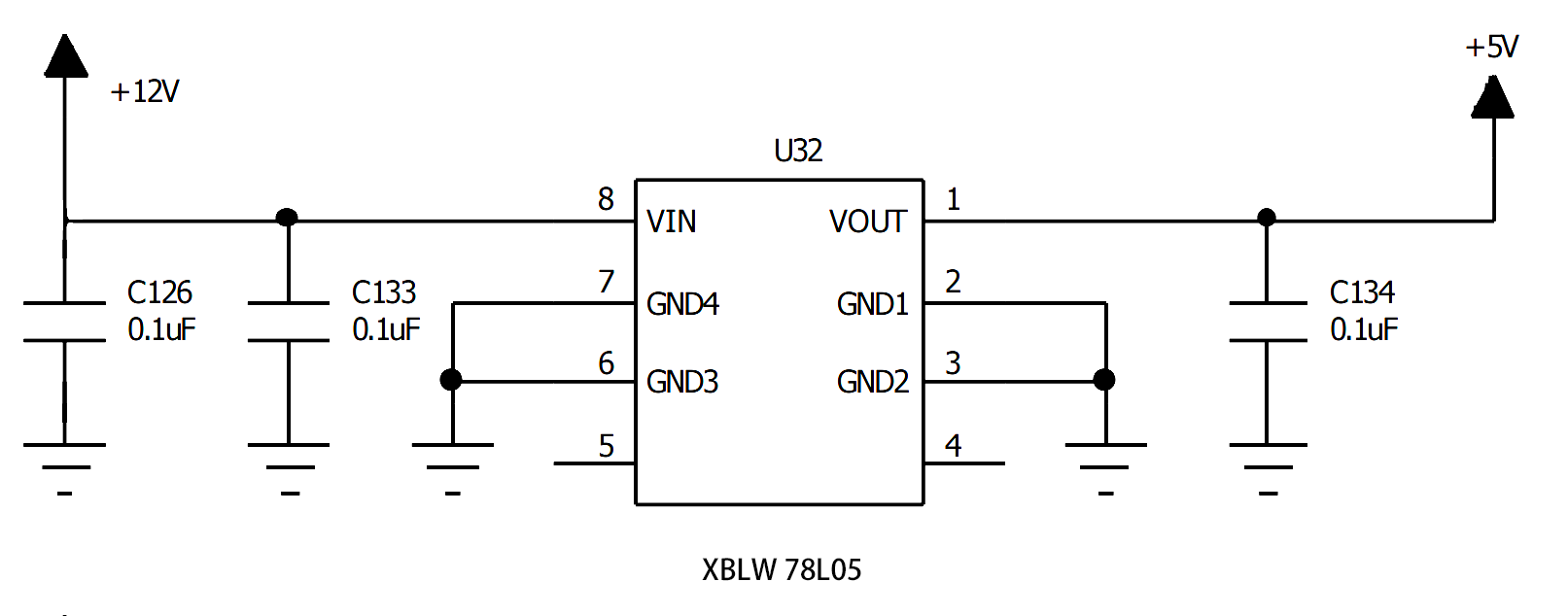
The 5V power supply circuit is mainly composed of voltage regulator chip XBLW 78L05 and filter capacitors (C126, C133, C134). Its core function is to convert the input +12V voltage into a stable +5V output voltage.
In the circuit, the +12V power supply is filtered by filter capacitors C126 and C133 to remove high-frequency noise and ripple from the power supply, then input to the input pin of voltage regulator chip XBLW 78L05. Voltage regulator chip XBLW 78L05 converts the +12V voltage to +5V voltage and outputs it through the output pin. The output terminal is connected to filter capacitor C134 to further filter out output ripple and ensure the stability of the output voltage. Through the cooperative work of voltage regulator chip XBLW 78L05 and filter capacitors, the circuit ensures the stable and reliable output +5V voltage. The voltage regulator chip XBLW 78L05 can output up to 100mA current, providing strong load capacity for the subsequent circuits.
3. 12V Power Supply Circuit
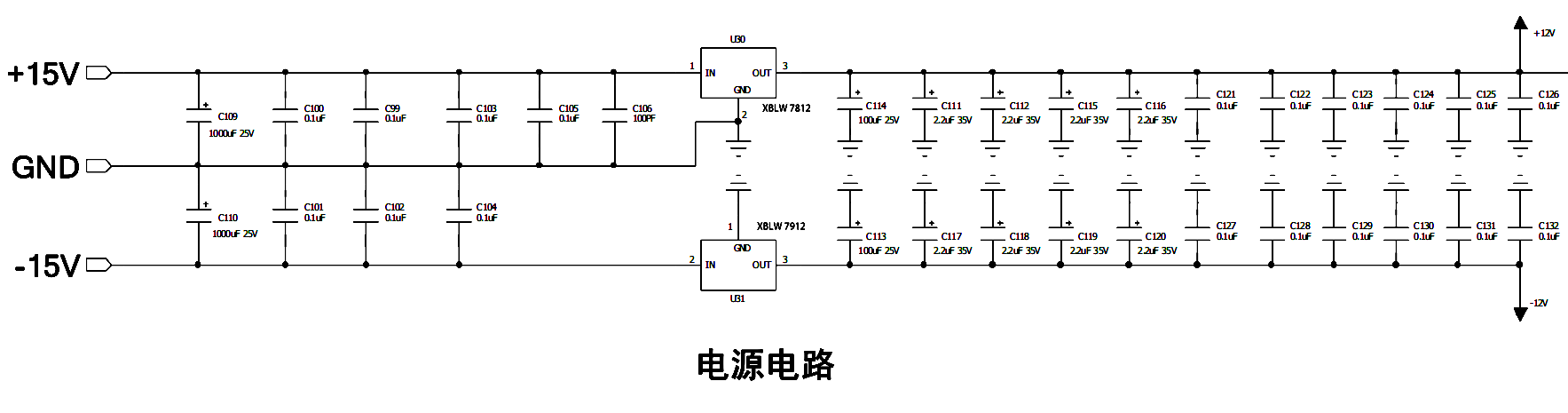
The core function of the 12V power supply circuit is to convert the input ±15V voltage into stable ±12V output voltage, mainly composed of voltage regulator chips XBLW L7812, MC7912CT and multiple filter capacitors. The +15V and -15V power supplies are preliminarily filtered by multiple filter capacitors to remove high-frequency noise and ripple from the power supply. The filtered positive voltage is input to the input terminal of voltage regulator chip XBLW L7812, which converts the +15V voltage to +12V voltage, while MC7912CT converts the -15V voltage to -12V voltage. The output terminals of the voltage regulator chips are connected to multiple filter capacitors to further filter out ripple and ensure the stability of the output voltage. Through the cooperative work of voltage regulator chips and filter capacitors, the circuit ensures the stable and reliable output ±12V voltage. Voltage regulator chip XBLW L7812 can output up to 1.5A current, providing stable load capacity for subsequent modules and XBLW 78L05.
4. Error Comparator Circuit
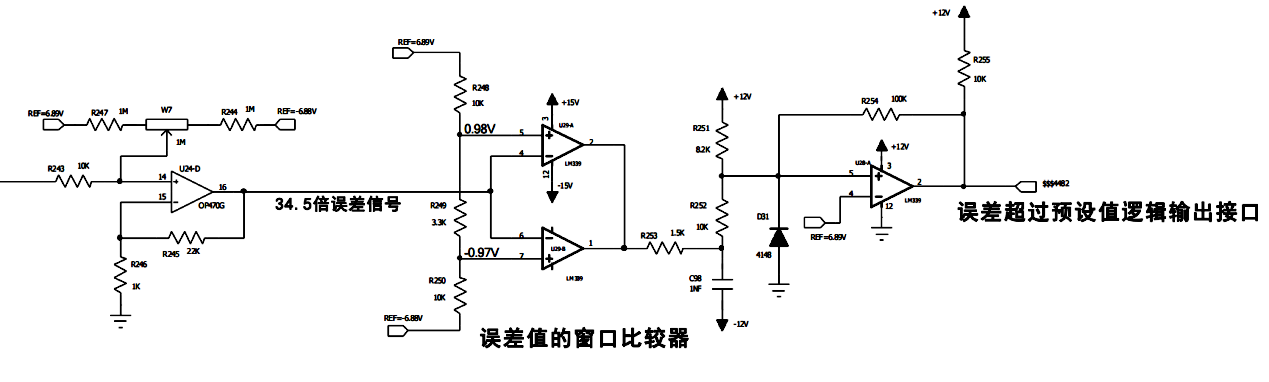
The main function of the error comparator circuit is to amplify the error signal and detect whether it is within the set range to ensure stable system operation. The circuit amplifies the error signal by 34.5 times through an OP470G amplifier, and then forms a window comparator circuit via two input channels of quad voltage comparator XBLW LM339 connected to different voltage reference values (0.98V and 0.97V), to detect whether the error signal is within the set range. If the error signal exceeds this range, the comparator outputs a corresponding signal. In addition, the circuit includes a diode (D31) and multiple resistors (R251, R252, R254, R255) at the output of the comparator for signal protection and current limiting to ensure the stability of the output signal. Capacitor C98 is used for filtering to reduce noise impact on the circuit. When the error signal exceeds the preset range, the circuit outputs a logic signal through another XBLW LM339 to trigger an alarm and adopt other protection measures. XBLW LM339 features a low input offset current of 5nA.
5. Power Supply Undervoltage Detection & Alarm Circuit
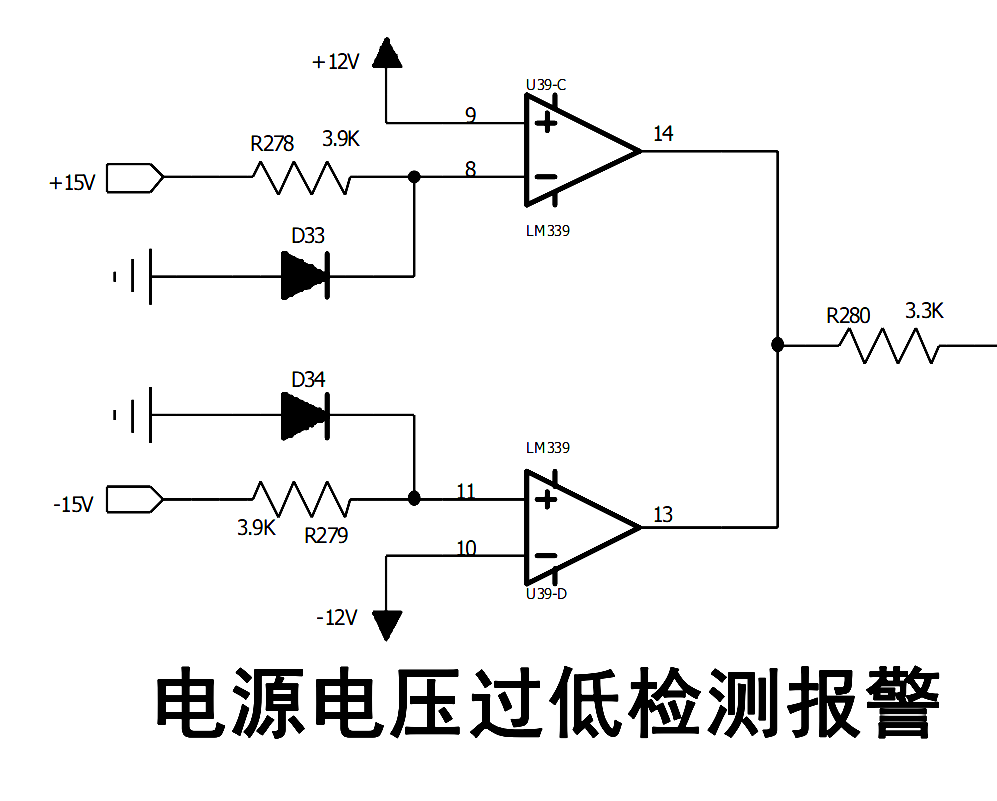
The main function of the power supply undervoltage detection & alarm circuit is to detect power supply voltage and send an alarm signal when the voltage is below the set value. The circuit uses two channels of voltage comparator XBLW LM339 (U39C and U39D), connected to the +15V and -15V power supplies respectively. Resistors R278 and R279 are both 3.9kΩ, and diodes D33 and D34 are connected to ground to prevent overvoltage from damaging the subsequent circuits. Resistor R280 is 3.3kΩ, connected in series to the non-inverting input terminal of the comparator.
When the power supply voltage is normal, the comparator outputs a fixed level, depending on the reference voltage setting. When the power supply voltage drops below the reference voltage, the comparator output toggles to trigger an alarm signal. This alarm signal is transmitted to subsequent circuits through R280 to drive the alarm and other indicating devices. XBLW LM339 features a wide power supply voltage range of 2V to 36V, making it more suitable for low-voltage detection circuits.
V.Logic Block Diagram
VI.Recommended Key Components for This Solution
Recommend News


Follow Us


-
Phone
400-9682 003