
I.Solution Overview
A multimeter, also known as a multimeter, is a portable electronic test instrument that integrates measurement functions for various electrical parameters such as voltage, current, and resistance. Its core functions include measuring DC and AC voltage, DC current, resistance, and the forward/reverse characteristics of diodes. Advanced models may also have additional functions such as capacitance measurement, transistor testing, frequency counting, and temperature measurement.
The design of a multimeter emphasizes user-friendly operation and measurement accuracy. It is usually equipped with intelligent features such as auto-ranging, data hold, backlight display, and auto power-off. Safety performance is also a key design focus, including overload protection and insulation testing to ensure safe use in high-voltage environments.
The user interface is simple and intuitive, with a rotary switch for selecting different measurement modes and ranges, and a clear display showing measurement results. It supports various power supply methods, including battery power or USB charging. Accessories such as test leads and probes facilitate connection and precise measurement. Regular calibration is critical to maintaining measurement accuracy. Some multimeters also support connection to a computer or smartphone for further data analysis and storage. In addition, some models are waterproof and dustproof, adapting to more working environments.
II.Function Definition & Performance Specifications
l Voltage Measurement:Capable of measuring DC voltage (DCV) and AC voltage (ACV).
l Current Measurement:Can measure DC current (DCA) and AC current (ACA).
l Resistance Measurement:Measures resistance values, typically ranging from a few ohms to several megaohms.
l Diode Test:Checks the forward voltage drop of a diode to determine if it is functioning properly.
l Transistor Test:Measures the hFE (current gain) of a transistor to evaluate its performance.
l Capacitance Measurement:Measures the capacitance of capacitors, essential for debugging and repairing electronic circuits.
l Frequency Measurement:Measures the frequency of signals in a circuit, typically ranging from a few hertz to several megahertz.
l Temperature Measurement:Measures temperature using a thermocouple or thermistor, suitable for various industrial and household applications.
l Input Protection:Protection mechanism to prevent overvoltage or overcurrent from damaging the multimeter.
l Data Hold:Locks the currently displayed reading for recording purposes.
l Standby Mode:Automatically powers off when not in use to conserve battery.
III.Working Principle of the Multimeter
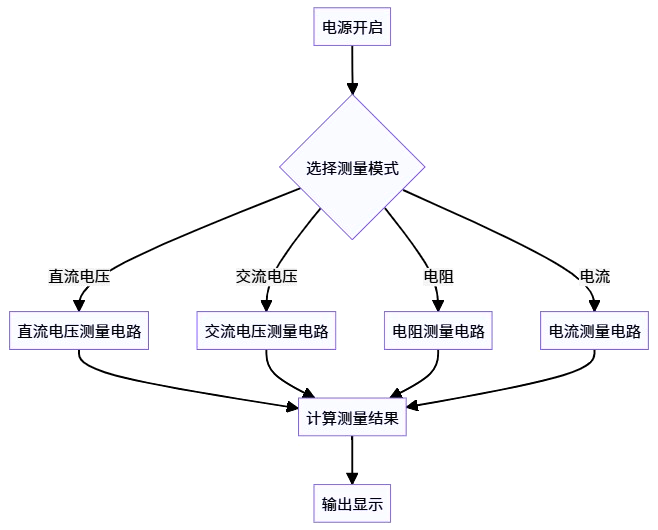
A multimeter is an electronic measuring instrument whose working principle is based on core electronic measurement technologies. It measures voltage directly, both DC and AC, through high-impedance amplifiers. For AC voltage, a built-in rectifier converts it into a DC signal. When measuring current, the multimeter is connected in series with a low-impedance shunt resistor in the circuit, and the current value is calculated by measuring the resulting voltage drop.
Resistance measurement follows Ohm’s Law: the multimeter supplies a known current and measures the voltage drop to compute the resistance. Diodes are tested by measuring the forward voltage drop to check performance. Transistor testing involves measuring hFE, the current gain. Capacitance measurement uses an AC signal source and measuring circuit to determine the charge-discharge time of the capacitor. Frequency measurement calculates the number of cycles via a counter circuit to obtain the frequency value. Temperature measurement relies on voltage changes from a thermocouple or thermistor.
Auto-ranging and an internal microprocessor allow the multimeter to adapt to different measurement needs, enabling accurate calculation and display of results. These functions make the multimeter an indispensable tool for electronic repair and testing.
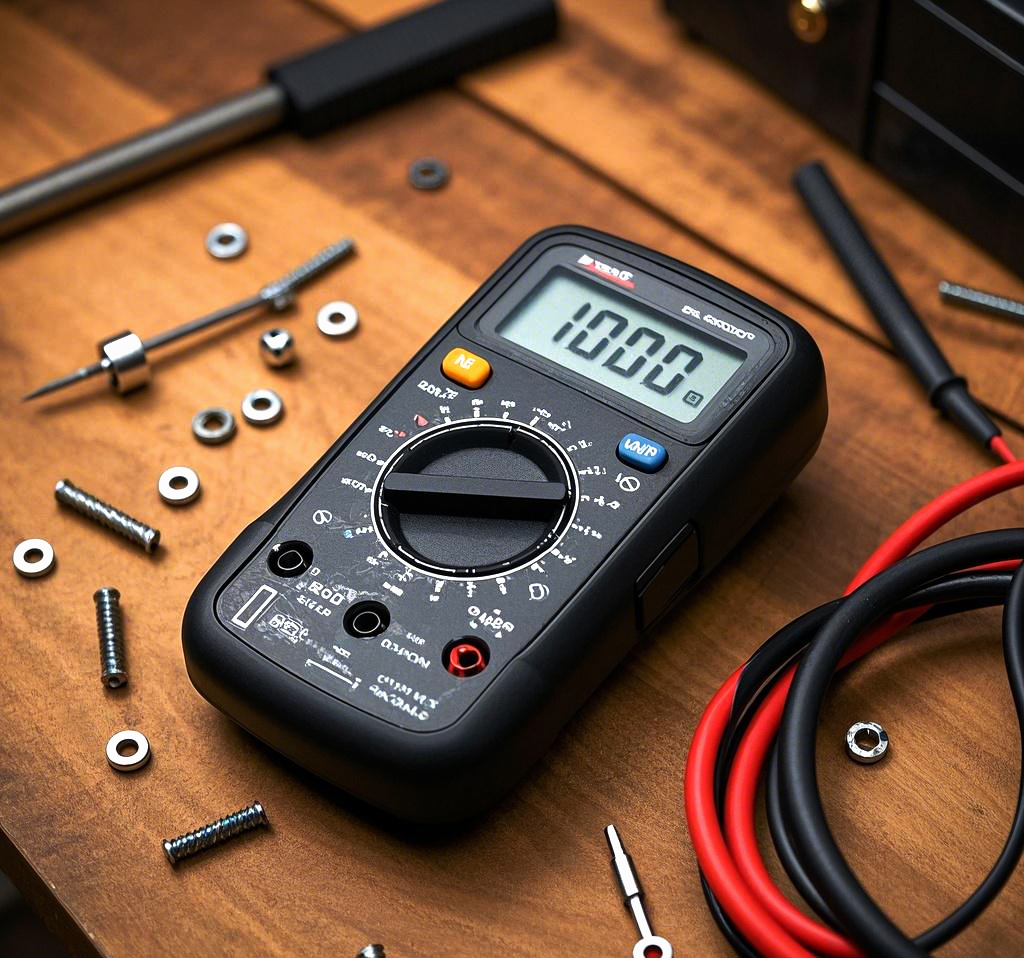
Figure: Portable Multimeter
IV.Hardware Design
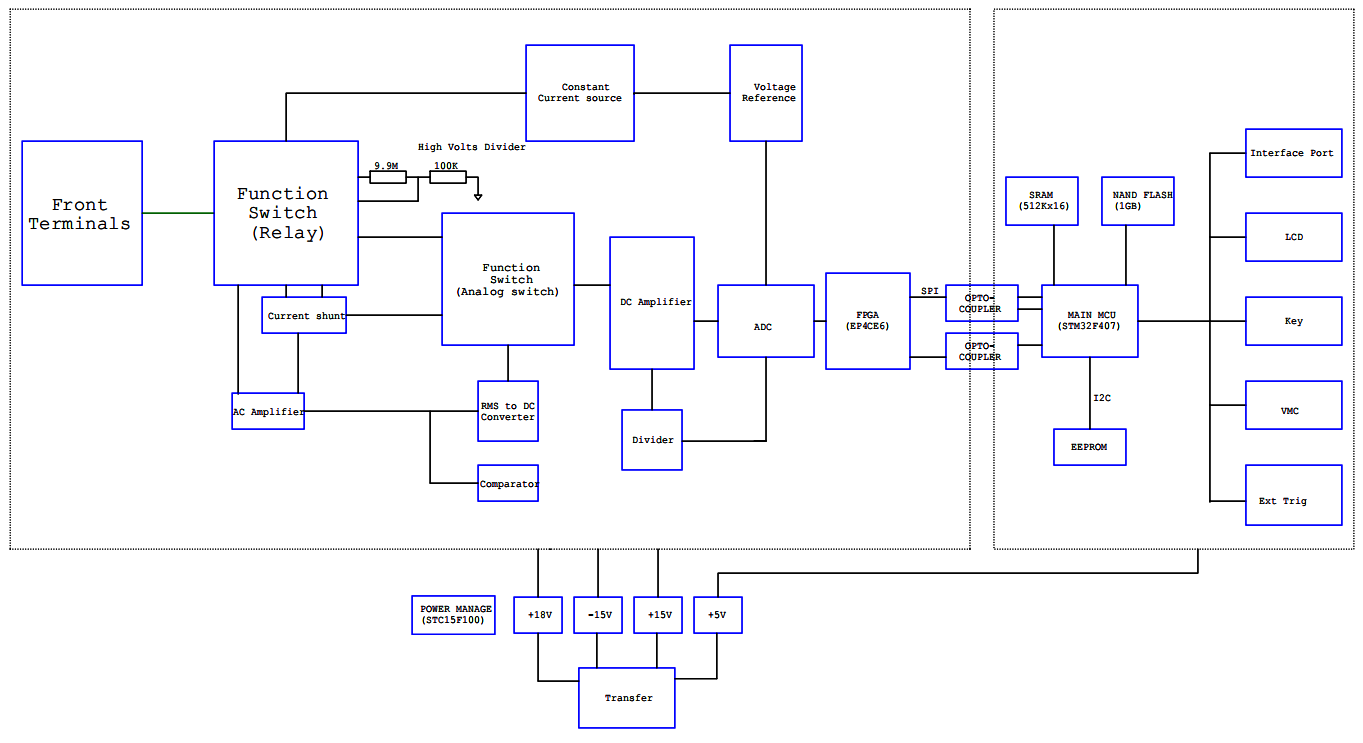
The internal structure of a multimeter is simple and user-friendly, mainly used by engineers to measure circuit current, voltage, resistance and other parameters. Some multimeters add additional tests such as diode measurement on this basis. This section mainly introduces the following related circuits: voltage follower (buffer) circuit, voltage comparator circuit, MOSFET drive circuit, RS232 communication circuit, and LDO step-down circuit.
1. Voltage Follower (Buffer) Circuit
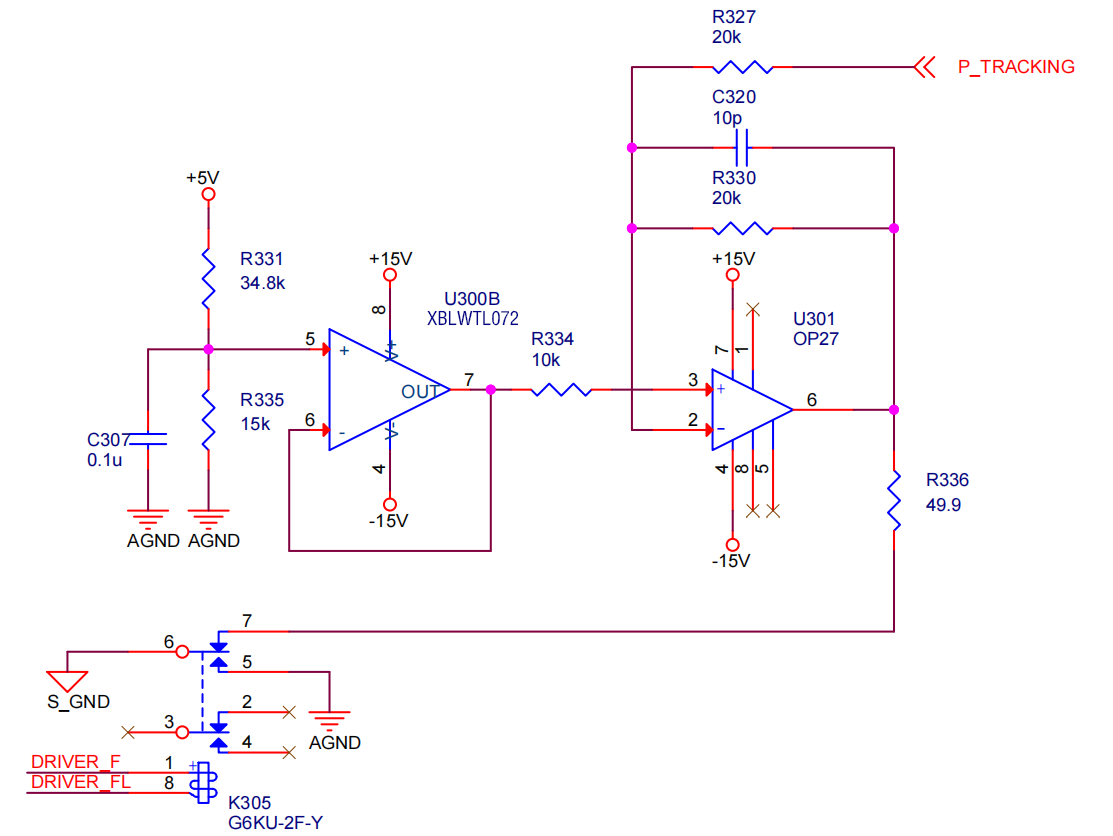
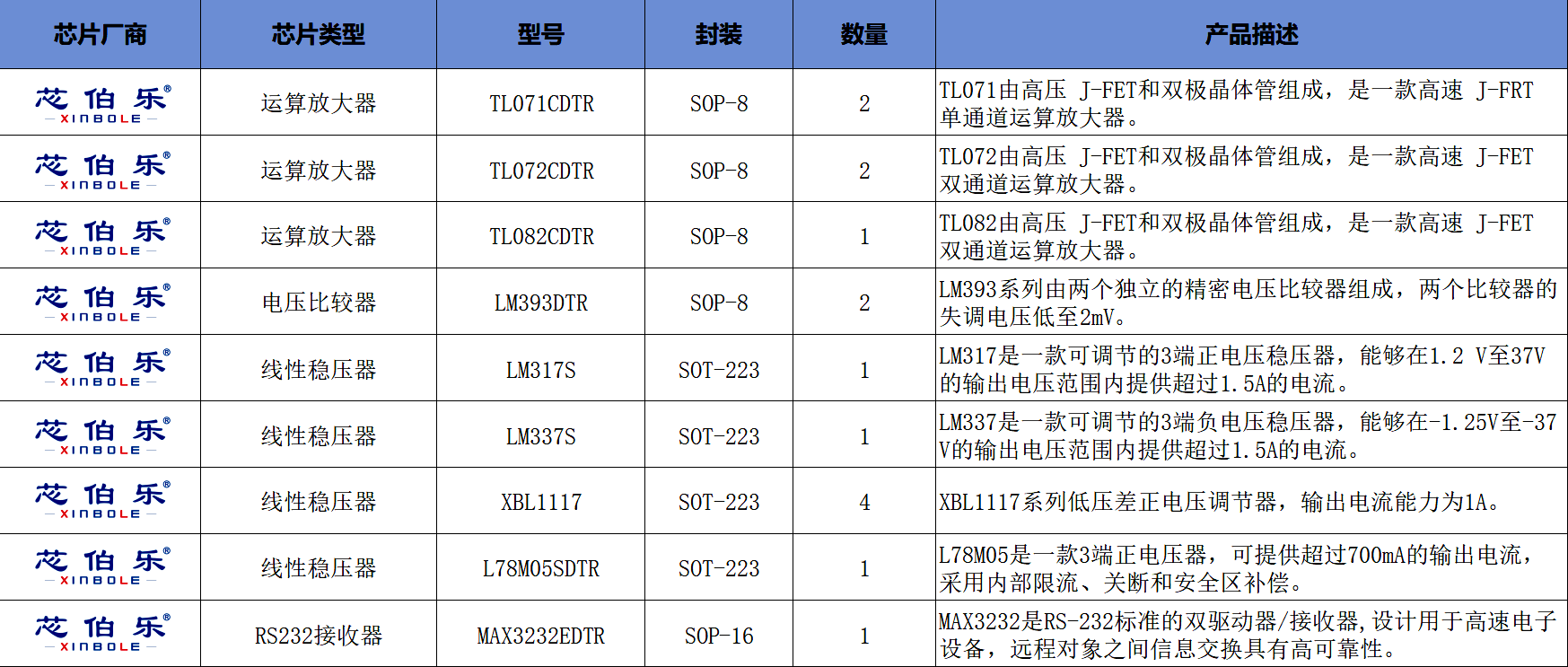
In this circuit, the XBLW-TL072 operational amplifier acts as a voltage follower, whose main task is to provide a stable 1.4V reference voltage. This voltage is generated by a voltage divider formed by a 34.8kΩ pull-up resistor and a 15kΩ pull-down resistor. The XBLW-TL072 features high input impedance and low output impedance, making it an ideal buffer that protects the front-stage circuit from load effects while providing a stable voltage source for subsequent circuits.
The OP27 operational amplifier is configured as an amplifier to amplify the voltage difference between the 1.4V reference voltage provided by the XBLW-TL072 and the P_TRACKING signal. The P_TRACKING signal is connected to the inverting input of OP27 through a 20kΩ resistor, while the non-inverting input of OP27 receives the 1.4V voltage from XBLW-TL072. The output of OP27 is fed back to its inverting input through a 20kΩ resistor, forming a negative feedback loop.
The entire circuit is designed to deliver high-precision and high-stability measurement results, which are the core requirements of a multimeter in electronic measurement. Through this carefully designed op-amp circuit, the multimeter can provide reliable and accurate results in various measurement tasks.
2. Voltage Comparator Circuit
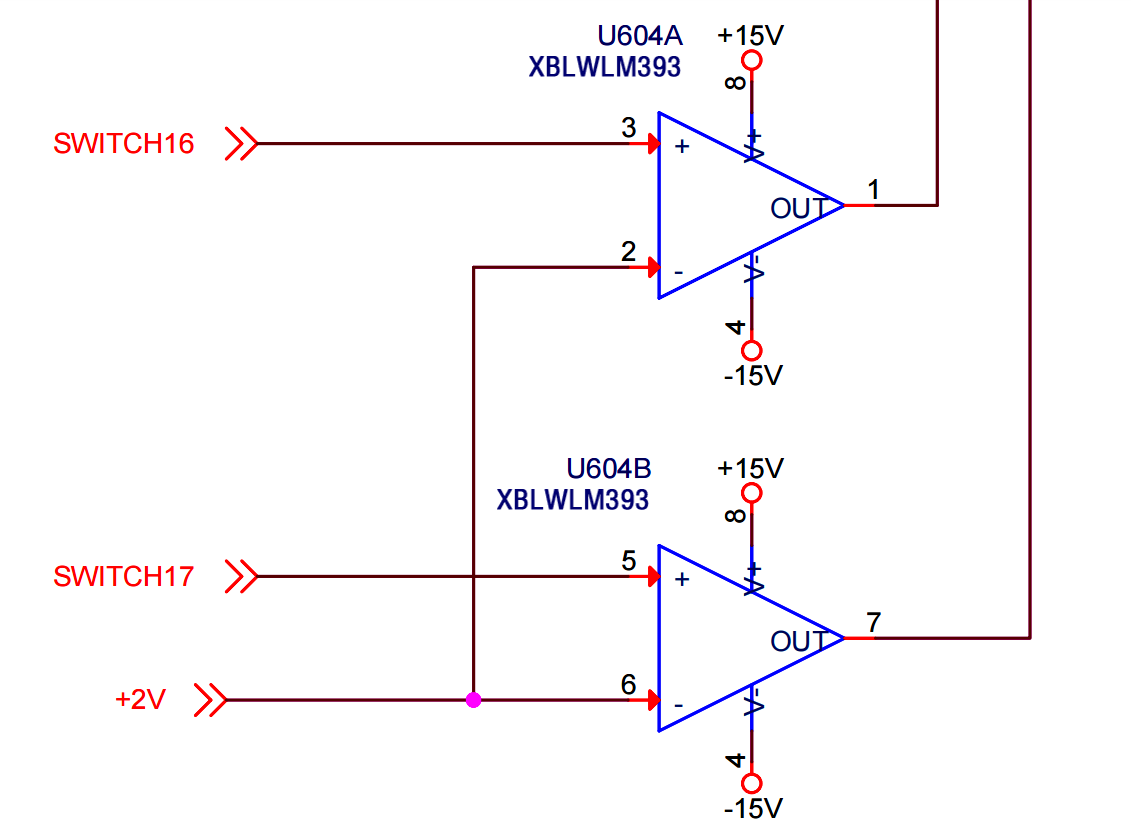
This circuit design uses the XBLW-LM393 dual voltage comparator, whose main function is to perform accurate comparison of the voltage levels of the two input signals SWITCH16 and SWITCH17. The inverting input of the comparator is configured with a 2V reference voltage, specifically used to identify whether the input signal voltage exceeds the 2V threshold, thereby triggering an output signal to ensure output accuracy.
The XBLW-LM393 comparator is designed for power efficiency, with an offset voltage of 2mV and a quiescent current of 0.4mA, which together significantly reduce overall circuit power consumption. In addition, the comparator adopts a dual power supply mode, a design choice that greatly improves measurement accuracy and the circuit’s ability to resist external interference. Dual power supply allows the comparator to operate stably over a wider voltage range, effectively reducing the impact of power supply noise on measurement accuracy and ensuring accuracy in signal processing.
3. MOSFET Drive Circuit
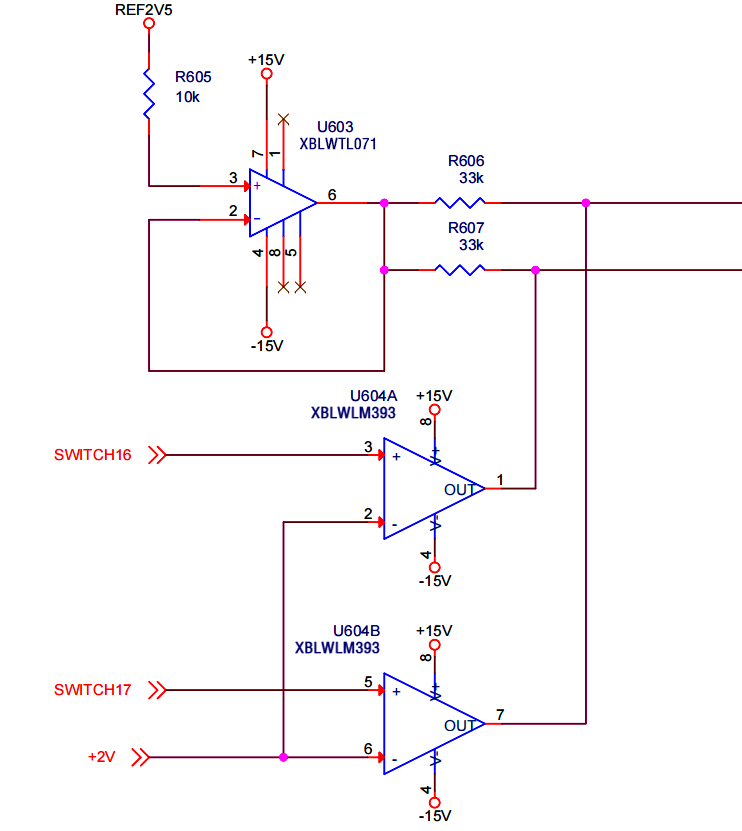
This circuit design uses the XBLW-TL071, a single-channel high-speed J-FET input operational amplifier, to build a voltage follower module. The non-inverting input of the XBLW-TL071 is connected to a stable 2.5V voltage source through a 10kΩ pull-up resistor, ensuring the high impedance characteristic of the input terminal and providing a clear reference voltage point for the circuit.
In the configuration of the XBLW-TL071, the inverting input is shorted to the output, making full use of the op-amp’s virtual short characteristic to realize the voltage follower function. In this configuration, the output voltage of the XBLW-TL071 stably follows the non-inverting input, maintaining the output voltage at 2.5V, providing a stable and reliable voltage for the subsequent circuits. The output of this circuit is further connected to a voltage comparator, which in turn drives the rear-stage MOSFET to achieve precise control of the load.
4. RS232 Communication Circuit
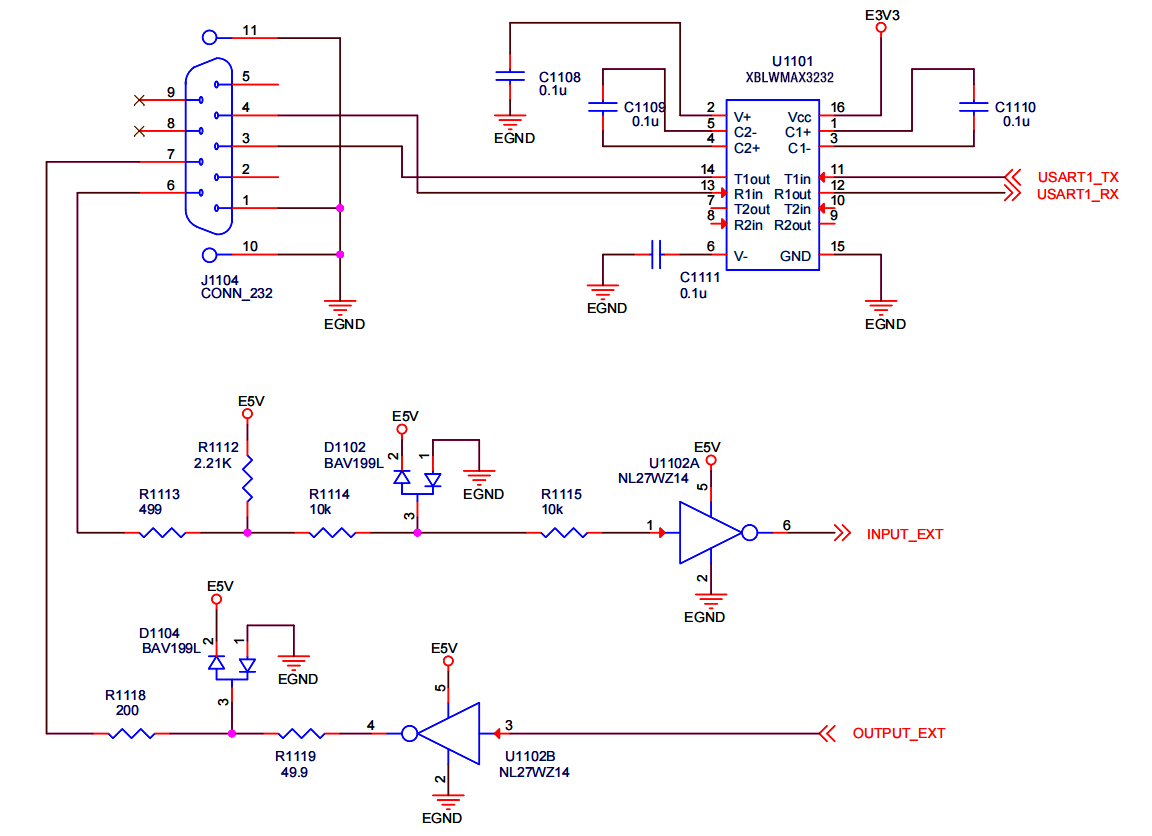
Figure 1 Load Voltage Signal Amplification
This circuit is a hybrid circuit integrating XBLW RS-232 level shifting and signal processing functions. The level-shifting section uses the XBLW-MAX3232 chip to stabilize the voltage via capacitors, realizing conversion between TTL and RS-232 levels, and performs serial communication with external devices through a DB9 connector, connecting to the USART1_TX and USART1_RX pins of the microcontroller. The signal processing section consists of operational amplifiers, combined with current-limiting and bias resistors and voltage-clamping zener diodes, for amplifying or filtering the input signal. The entire circuit is designed to enable serial data transmission with external devices via the RS-232 interface, while providing signal input/output interfaces (INPUT_EXT and OUTPUT_EXT) for various serial communication and signal processing applications.
5. LDO Step-Down Circuit
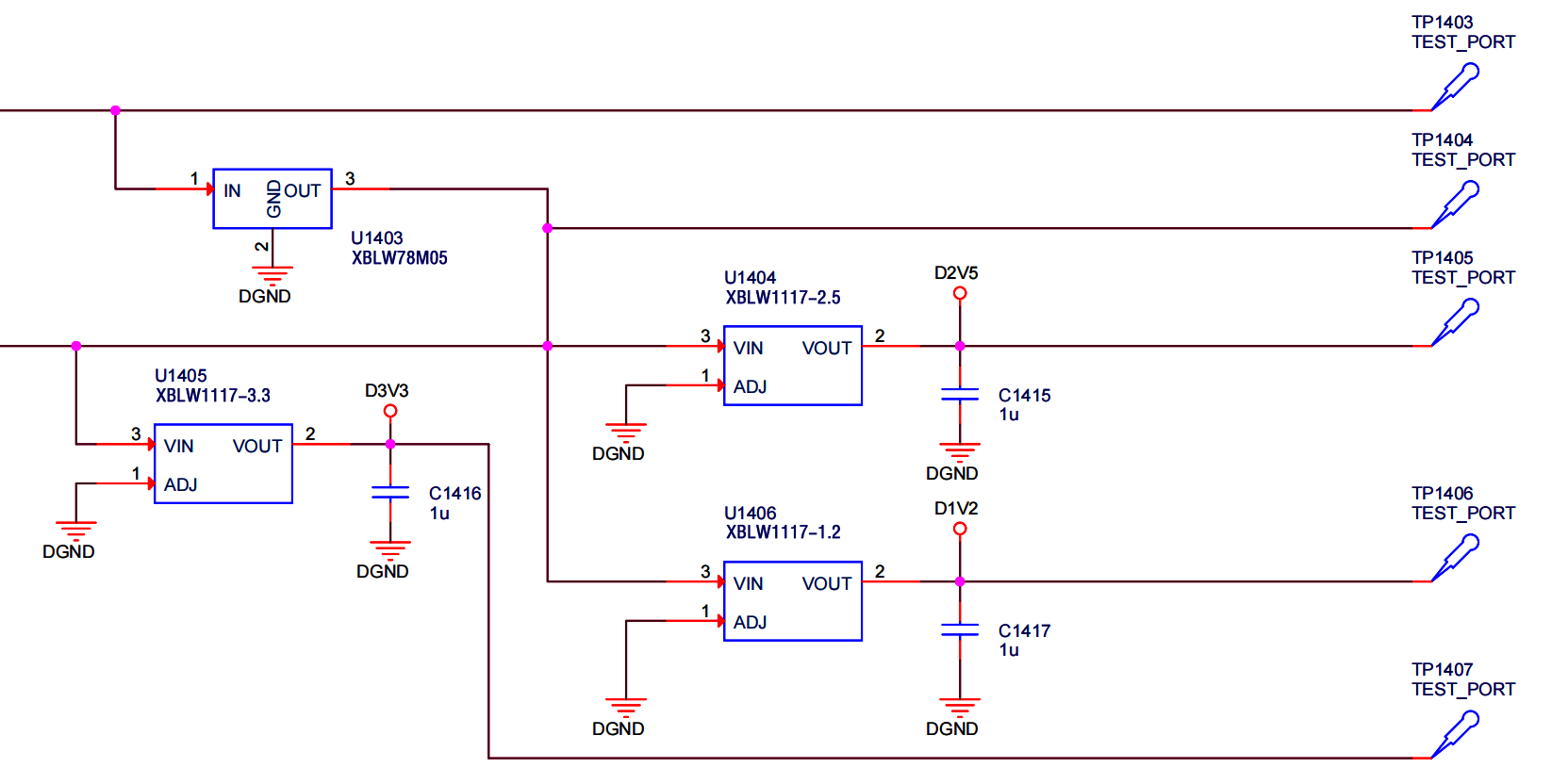
This circuit design uses LDO (Low-Dropout Regulator) technology to achieve multi-stage voltage step-down to meet the voltage requirements of different devices. The XBL1117 regulator converts the input voltage to 1.2V, 2.5V and 3.3V for devices with different voltage demands, with a maximum load current of up to 1A. Its simple peripheral circuitry helps save PCB space and reduce costs. Meanwhile, the XBLW-78M05 regulator converts the input voltage to 5V to power other devices, with an output current capability of 700mA, and built-in multiple safety features such as thermal overload protection and overcurrent protection. These protection features significantly improve the overall circuit’s stability and reliability. Through this design, the circuit can provide a stable power supply adapting to different voltage requirements for various electronic devices, while maintaining design simplicity and cost-effectiveness.
V.Logic Block Diagram
VI.Recommended Key Components for This Solution
Recommend News


Follow Us


-
Phone
400-9682 003