
ChipBro's new products:LM3914 / LM3915 / LM3916 display driver selection and design introduction
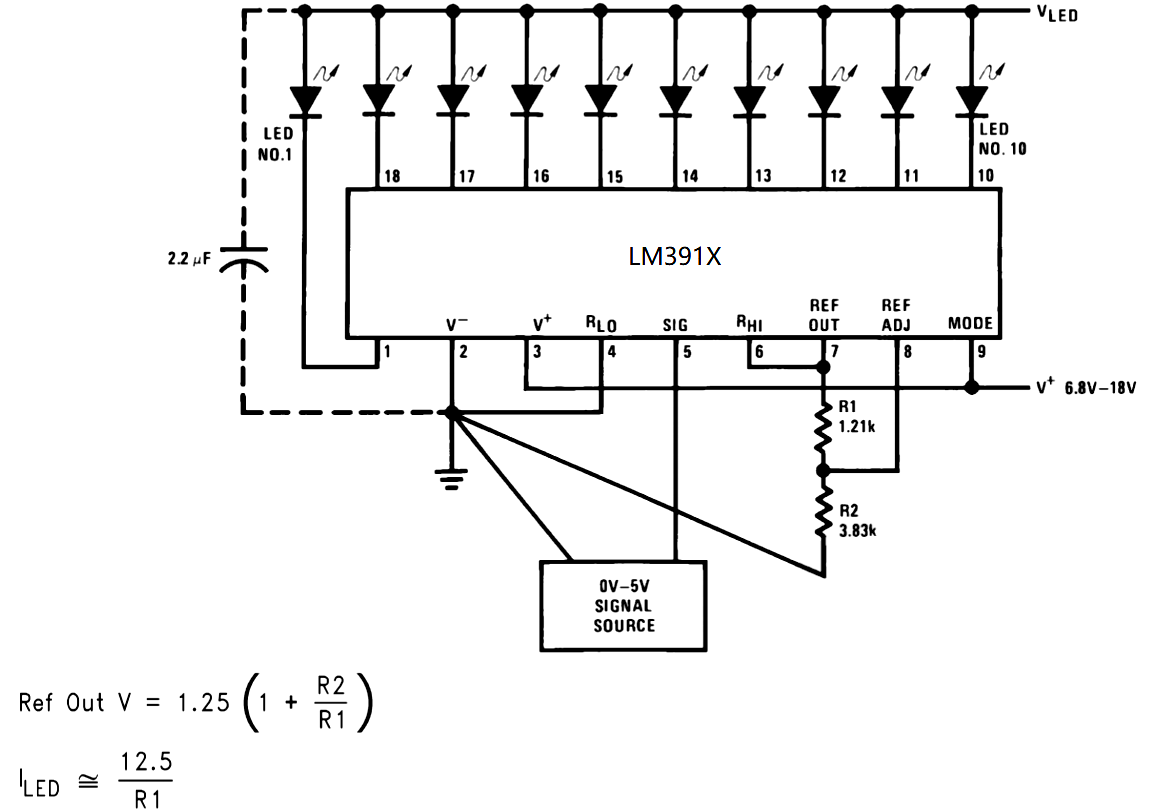
In the field of LED bar graph display drivers, the LM3914 , LM3915 , and LM3916 are three classic models that cannot be ignored. They share the same chip architecture and pin definitions, but exhibit completely different scale characteristics due to the differences in their internal resistor voltage divider networks .
1.Same architecture, three modes
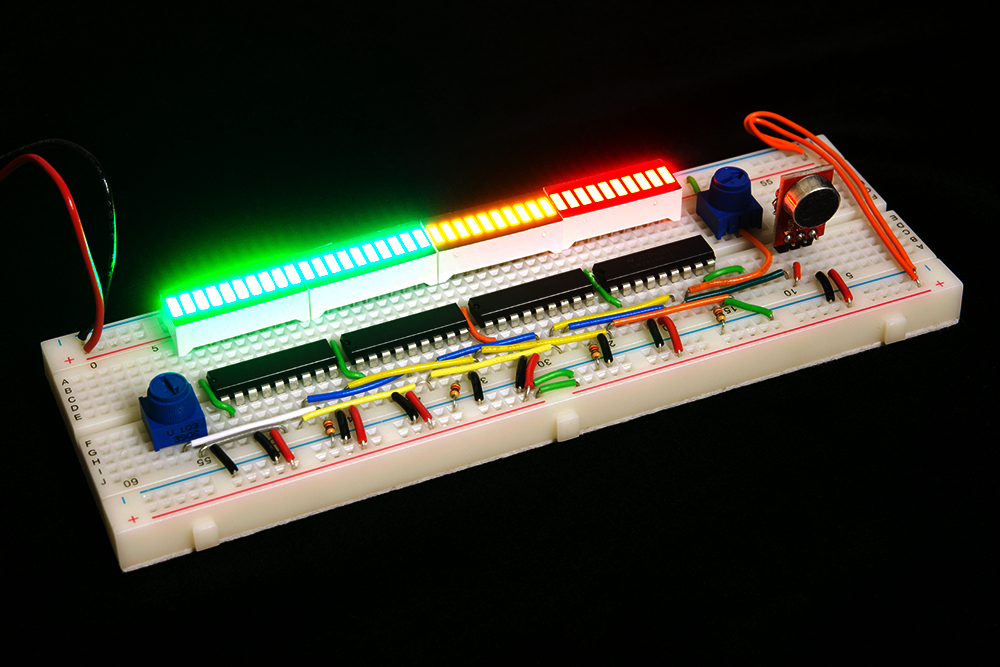
The XBLW LM3914, XBLW LM3915, and XBLW LM3916 are three18-pin DIP-packagedmonolithic integrated circuits that can senseanalog voltage levels and drive up to10 LEDs, LCDs, or vacuum fluorescent displays. They share the following core features:
The dot and bar display modes can be switched externally via pin 9;
The output current is programmable , ranging from 2mA to 30mA, eliminating the need for an external current-limiting resistor (LM3915 is 1mA to 30mA).
Built-in 1.2V to 12V adjustable reference voltage source ;
The input can withstand ±35V overvoltage without being damaged or producing erroneous output.
Operating voltage range: 3V to 25V .
The only difference between the three lies inthe resistance configuration of the internal 10-stage resistor divider—this set of resistors determines the threshold scale at which each LED lights up.
2.Three scales, three scenarios
LM3914 - Linear Scale
The LM3914 internally incorporates an adjustable voltage reference and a precise 10th-order voltage divider , with each step corresponding to an equal input voltage increment. Therefore, it is suitable for linear analog display scenarios , typically in applications such as LED voltmeters and battery level indicators where a proportional representation of physical quantities is required . Linearity can be controlled to within 0.03% .
LM3915 - Logarithmic scale (3dB/step)
The LM3915 internal resistor divideris designed with 3dB logarithmic steps. Each additionalLED illuminates corresponds toa 3dBincrease in the input signal level. This scaling characteristic is ideal forindicating wide dynamic range signals, such asaudio levels,RF signal strength,power monitoring,light intensity, or vibration measurements.
LM3916 - VU gauge scale
The LM3916's internal resistor divider is specifically optimized for audio VU meters . Compared to the LM3915's uniform 3dB steps, the LM3916 has denser steps near 0dB and sparser steps in the low-level region. This is to simulate the quasi-logarithmic response characteristics of a traditional analog VU meter , suitable for volume unit indication in audio devices . Accuracy is typically better than 0.2dB .
3.Application and Selection Recommendations
characteristic | LM3912 | LM3915 | LM3916 |
Scale type | linear | Logarithmic(3dB/step) | Quasi-logarithm(VU table) |
Typical applications | Voltmeter, battery indicator | Power meter, audio level | AudioVU Table |
internal voltage divider | 10x1kΩ | Logarithmic resistance sequence | VU Table Dedicated Sequence |
When selecting a model, please note the following: If the signal being measured isa linear physical quantity(such as voltage or current),chooseLM3914; if the signalhas a wide dynamic range and human hearing perceives it logarithmically(such as audio power orRF field strength),chooseLM3915; if audio monitoring requires strictadherence toVU meter standards,chooseLM3916.
4.Debouncing and Interference Suppression:When measuringslowly changing DC signals, it is recommended to connect a 0.1μF~1μF capacitor in parallel with ground at the input terminal and abefore being sent to the chip, becausein seriesto forma low-pass filtertosuppress power frequency noiseandtransient interference. Foraudio signals, they need to beprecisely rectifiedorconverted to RMS valuefluctuate violently with the waveform the LM391x series directly responds tothe instantaneous value of the input voltage , and the display will 1kΩ resistor if not rectified .
Summarize
The three chipsare almost identical in electrical specifications.Their pinouts are fully compatible on the PCB,allowing for direct replacement on the same PCB to achieve different ranges/characteristics switching. This designsignificantlysimplifies product iteration andfeature customization processes, greatlyimproving development efficiency.
Recommend News

Follow Us


-
Phone
400-9682 003